Isolation and Safety Standards for Electronic Instruments
Contents
- Overview
- Who Says What Is Safe?
- What Is Isolation? What Is Its Role in Providing Safety?
- How Much Insulation Makes a Product Safe?
Overview
One manufacturer says its DMM is a Category II multimeter with isolation. Another says its DMM is a category I unit with double insulation. What does all this terminology mean? If both DMMs are rated at 250 VRMS, is there a difference? The goal of this paper is to explain where these terms come from, what they mean, and the implications for safety standards.
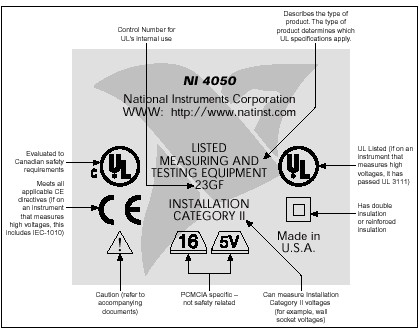
Figure 1. Common Instrument Safety Symbols Explained
Who Says What Is Safe?
Whenever safety is an issue in a product, there is normally a standard stating what is safe and what is not. High voltages are no exception. Both the European Commission and Underwriters Laboratories, Inc. (UL) have issued standards covering safe design of high-voltage instruments.
In 1973, the European Commission issued the Low Voltage Directive (72/23/EEC). This document clearly defined voltages requiring special considerations for safe use in an electrical device. These levels are between the following ranges:
- Minimum: 50 VRMS or 75 VDC
- Maximum: 1,000 VRMS or 1,500 VDC
On 1 January 1997, the Low Voltage Directive was included as a mandatory requirement for the CE Mark scheme.
There are approximately 200 individual safety standards harmonized (approved for use to demonstrate compliance) to the Low Voltage Directive. The relevant standard for instrument manufacturers is EN 61010 -- Safety Requirements for Electrical Equipment for Measurement, Control, and Laboratory Use. 61010 is a little more strict than the Low Voltage Directive. It says that 30 Vrms or 60 VDC are dangerous voltages. In addition to high-voltage design requirements, EN 61010 also includes other safety design constraints (such as flammability and heat). Instrument manufacturers must meet all the specifications in EN 61010 to receive the CE label.
There are two other standards very similar to EN 61010 -- IEC 1010 and UL 3111. IEC 1010, which was established by the International Electrotechnical Commission, is the precursor to EN 61010. The European Commission adopted it and renamed it EN 61010. UL 3111 is also a child of IEC 1010. UL took IEC 1010, made some modifications and adopted it as UL 3111. This new, strict UL standard replaces the older, more lenient UL 1244 standard for measurement, control, and laboratory instruments. For new designs, instrument manufacturers must meet all of the specifications in UL 3111 to receive a UL listing.
The rest of the paper covers electrical safety issues that manufacturers must keep in mind to make their products compliant with these standards. For simplicity, the article will refer only to the original standard, IEC 1010. However all of the observations about IEC 1010 apply to UL 3111 and EN 61010 as well.
What Is Isolation? What Is Its Role in Providing Safety?
Let's take a look at one of the major ways instrument manufacturers provide high-voltage safety--isolation. While isolation physically and electrically separates two parts of a circuit, the two parts can interact. The isolation is achieved by using electromagnetic field coupling between the two circuits. The three most commonly used methods are optocou-plers (light), transformers (magnetic flux), and capacitive couplers (electric field).
Isolation provides several advantages:
- It breaks ground loops.
- It improves common-mode voltage rejection.
- It permits the two parts of the circuit to be at different voltage levels, which means one can be safe while the other side is at hazardous voltage levels.
For isolation to be safe, it needs to have two things -- high-integrity isolation components (optocouplers, transformers, capacitive couplers) and a safe insulator barrier. For example, this insulator can be a piece of plastic, a keep-out space in a PWB, or an air gap.
How Much Insulation Makes a Product Safe?
The amount of insulation required in the isolation barrier depends on several factors:
- Working Isolation Voltage (voltage across the isolation barrier) -- larger isolation voltages require more insulation.
- Transient Voltage (temporary voltage spikes across the isolation barrier) -- insulation strong enough to withstand the normal working voltages of the circuit can break down under large transients. Therefore larger transients will require more insulation.
- Air Pollution -- insulation can be reduced by contaminants in the air. Dirtier environments require more insulation.
- Single-Fault Current Path -- if the insulation breaks down, can the shorted current go through a human body? If so, a larger amount of insulation is required.
The IEC has covered these issues in Section 6 of the IEC 1010 standard. The commission has defined things such as overvoltage categories, pollution degrees, and double insulation.
Installation Categories
The IEC defined the term Installation Category (sometimes referred to as Overvoltage Category) to address transient voltages. Category IV devices can handle the largest transients relative to the normal working voltage. Category I devices can handle only small transients. For example, a 50 V Category IV device can handle transients of up to 1500 V, whereas a 50 V Category I device can withstand only 330 V.
 | Transient Voltage Tolerated
| ||
Nominal Voltage (VAC)
| Category I
| Category II
| Category III
|
50
| 330
| 500
| 800
|
100
| 500
| 800
| 1500
|
150
| 800
| 1500
| 2500
|
300
| 1500
| 2500
| 4000
|
600
| 2500
| 4000
| 6000
|
1000
| 4000
| 6000
| 8000
|
Here is how the IEC classifies its installation categories:
Category I -- For connection to circuits in which measures are taken to limit transient over-voltages to an appropriately low level.
Examples: Protected electronic circuits.
Category II -- Energy-consuming equipment to be supplied from the fixed installation.
Examples: Appliances, portable tools, and other household and similar loads. Measurement equipment intended to measure the voltage levels of these loads must be rated at this overvoltage category.
Category III -- In fixed installations and for cases where the reliability and the availability of the equipment is subject to special requirements.
Examples: Switches in fixed installation and equipment for industrial use with permanent connection to the fixed installation; measurement equipment intended to measure the voltage levels of these fixed installations must be rated at this overvoltage category.
Category IV -- Used at the origin of the installation.
Examples: Electricity meters and primary overcurrent protection equipment.
Note: Although the IEC has defined this category in other documents, IEC 1010 does not cover this overvoltage category.
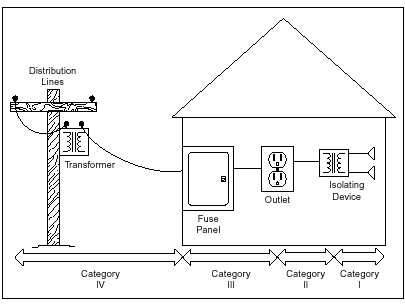
Figure 2. Installation Categories as Related to Power Distribution Networks
What does all this information mean? Let's look at the house example in Figure 2. The picture shows the transmission lines as Category IV because the raw voltage from the power company contains huge transients, which fall in the highest category -- Category IV.
By the time the voltage goes through the fuse panel into the house, the protective circuitry is sufficient to reduce the transients to Category III. Fixed electrical devices, such as air conditioners or heaters, can use this Category III power and withstand the transients.
The vast majority of electrical devices are not fixed -- they can be unplugged and moved. Although these devices cannot withstand Category III transients, they can handle Category II transients. Examples of such devices are television sets, drills, and microwave ovens. Household power distribution networks generally provide sufficient transient suppression that wall outlets provide Category II power.
Category I devices are the least robust; they can withstand only small transients. Readily accessible power sources (such as wall outlets) do not provide power clean enough to qualify as Category I. Therefore a Category I device requires an additional protective device (such as the isolation transformer in Figure 2) to suppress the transients present in Category II power. An example of a Category I circuit with such a protection scheme is the audio amplifier circuitry inside a stereo receiver. The stereo receiver contains a power supply that suppresses the Category II transients from the wall socket, creating Category I power, which will not damage the amplifier circuit.
Degrees of Pollution
IEC 1010 specifies different types of pollution environments. Harsher environments require more insulation. As an alternative to increased insulation, the designer can create a cleaner microenvironment for the circuit. This microenvironment can be created by using enclosures, encapsulation, or hermetic sealing.
Pollution Degree 1 -- No pollution or only dry, nonconductive pollution occurs. The pollution has no influence.
Example: A circuit in a hermetically sealed box (such as an IC chip). No air can come into the box to bring condensation or conductive particles.
Pollution Degree 2 -- Only nonconductive pollution occurs. Occasionally, temporary conductivity caused by condensation is to be expected.
Example: A circuit used in an office environment. The circuitry inside a computer would fall in this category.
Pollution Degree 3-- Conductive pollution occurs, or dry nonconductive pollution occurs that becomes conductive due to condensation that is to be expected.
Example: Circuitry that is exposed to outside air, but will not be in contact with precipitation. A garage door opener would fall under this category.
Note: Although the IEC has defined this pollution degree in other documents, IEC 1010 does not cover Pollution Degree 3.
Pollution Degree 4 -- The pollution generates persistent conductivity caused by conductive dust or by rain or snow.
Example: An exposed outdoor control box for a water pump.
Note: Although the IEC has defined this pollution degree in other documents, IEC 1010 does not cover Pollution Degree 4.
Insulation Types
In any isolation scheme, there is a certain amount of insulation required to create the isolation barrier. IEC 1010 calls this basic insulation. If a breakdown in the insulation could cause dangerous current to flow through a human body, basic insulation is not enough safety protection. IEC 1010 gives the designer several insulation improvement options. Two of the options are double insulation and reinforced insulation. Double insulation is basic insulation plus some supplementary insulation (for example, another basic layer). If the basic insulation breaks down (single fault), the supplementary insulation keeps the user safe. Reinforced insulation serves the same purpose as double insulation except that the basic and the extra insulation cannot be tested separately.
What Do All These IEC Definitions Mean for You?
Knowing the IEC definitions, you can understand what your present measurement instruments can do and what you need to buy in the future.
For example, a 250 VRMS Category I DMM is not rated to measure standard wall socket voltages. The DMM is not designed to withstand the transient voltages on the power line. However, a Category II 500 VRMS DMM, such as the NI PXIe-4081 7½-digit DMM, is designed for measuring wall socket voltages. It contains the extra insulation necessary to withstand wall socket transients.
When measuring high voltages, safety is of great concern. When using your existing equipment or buying new equipment, pay attention to more than just the working voltage rating. Make sure your equipment meets the UL, CE, or IEC standards you need. That way you'll be assured that the high voltage goes into your measurement circuit instead of you!
NI hardware includes detailed specifications and publishes product certifications so that you can ensure the items you choose meet your requirements for isolation and safety.